- Author: Daniel Davies – Director, Davies Homes
- Published: 15 May 2026
One of the most common questions people ask when choosing a home builder is: “What’s your cost per square metre?”
On the surface, it seems like a straightforward question, but according to Daniel Davies of Davies Homes, cost per metre is oversimplified and misleading.
“Builders don’t price homes by square metre. Every build is made up of hundreds of individual components – excavation, foundations, rooflines, structure, finishes, labour, subcontractors, all of which vary from project to project. Reducing that to a single rate per square metre strips out the detail that determines the cost”, he says.
So while cost per square metre might seem like a useful benchmark, it fails to capture the detail that actually drives cost and value. Here are the main reasons we can’t rely on it.
1. No Industry Standard
There is no industry standard for what is included in a cost per square metre. One builder may include landscaping, fencing, driveways and decking; while another may not.
2. Every Home Is Different
Design complexity, materials, finishes, and site conditions can vary significantly between builds. For example, a rectangular, single-level home is far more cost-efficient than a home with high ceilings, complex rooflines, large spans or structural steel, floor-to-ceiling glass, multiple bi-fold doors, positioned on a steep site. On top of that, fixtures and fittings can vary significantly, meaning you’re often not comparing like with like.
3. Not All Space Costs the Same to Build
A key flaw in cost per square metre is the assumption that all areas of a home cost the same.
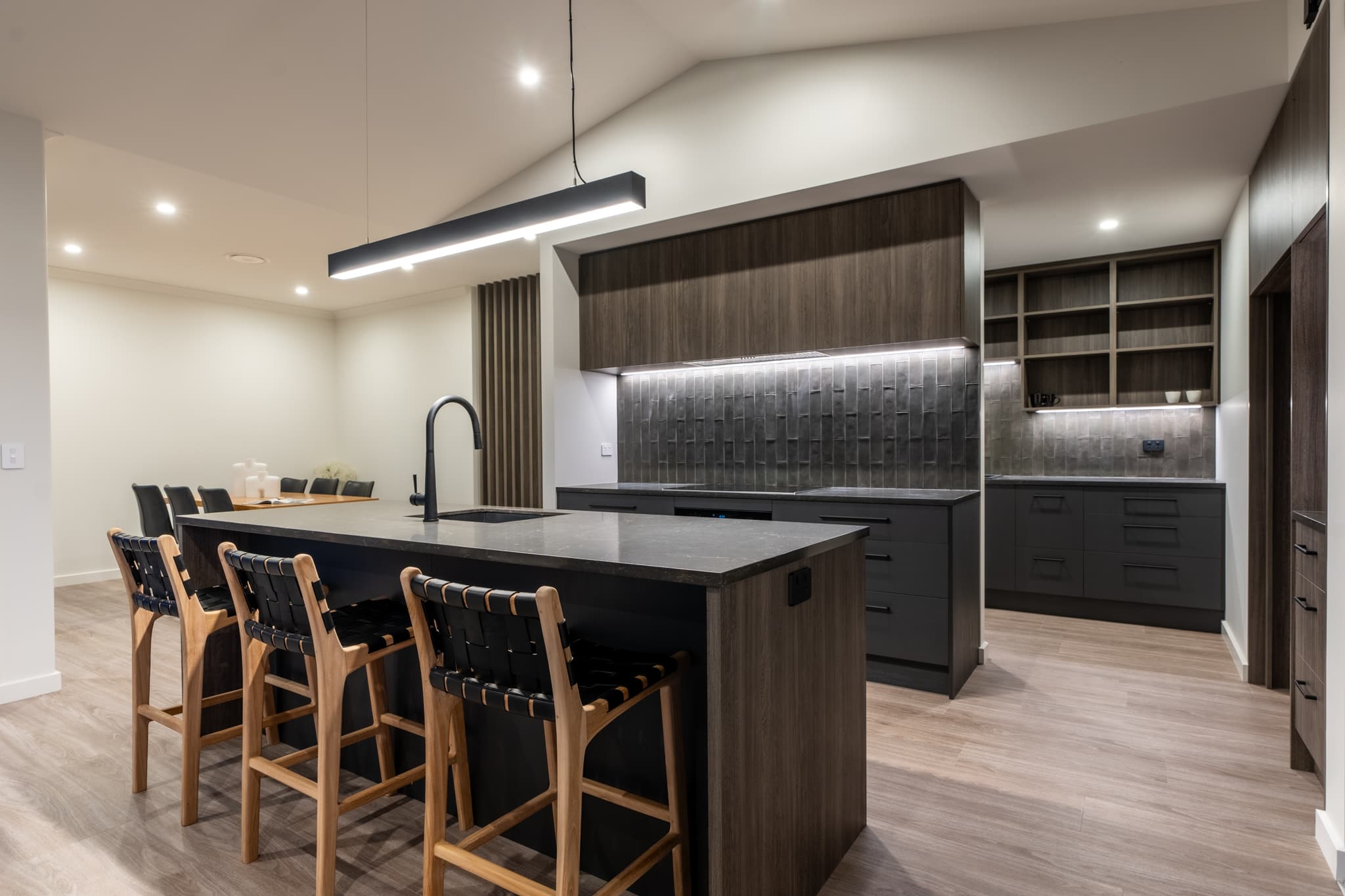
Bathrooms and kitchens are significantly more expensive per square meter. By comparison, garages, bedrooms, and hallways are far less expensive. In smaller homes, high-cost areas like kitchens and bathrooms make up a much larger proportion of the total floor area.
This creates a distortion where smaller homes can appear more expensive on a per metre basis, even though the total build cost is lower.
Example: Why Cost Per Square Metre Can Be Misleading
A key flaw in cost per square metre is the assumption that all areas of a home cost the same.
Bathrooms and kitchens are significantly more expensive per square meter. By comparison, garages, bedrooms, and hallways are far less expensive. In smaller homes, high-cost areas like kitchens and bathrooms make up a much larger proportion of the total floor area.
This creates a distortion where smaller homes can appear more expensive on a per metre basis, even though the total build cost is lower.
Home A
- 2 bedrooms
- 2 ensuites + guest toilet + standard kitchen
- Single garage
- High cost areas: 25m²
- Total area: 120m² 25m² / 120m² = 21%
- Build cost: $560,000
- Cost per m²: $4,666/m²
Home B
- 5 bedrooms
- Three-car garage
- Family bathroom + ensuite + separate toilet + bigger kitchen
- High cost areas: 35m²
- Total area: 250m² 35m² / 250m² = 14%
- Build cost: $900,000
- Cost per m²: $3,600m²
Even though Home B costs significantly more overall, its cost per square metre is lower. Kitchens and bathrooms don’t scale with house size in the same way other rooms do, and that’s what drives differences in cost per square metre.
Site & Covenants Affect Price
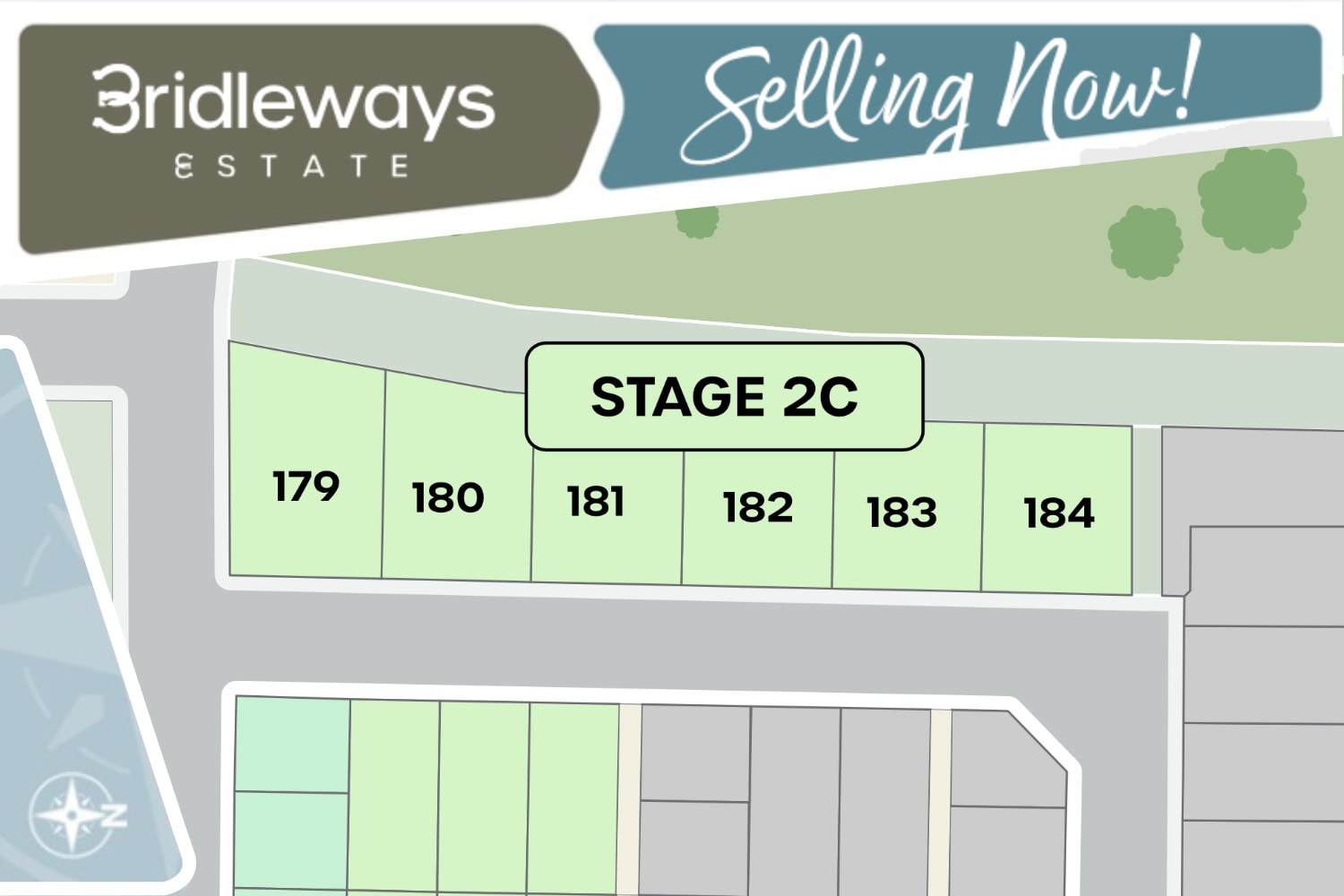
Where you build also plays a major role in cost. Sustainable, future-first developments like Bridleways require:
- Solar panels
- Rainwater detention tanks
- EV charging infrastructure
These features add upfront cost, but reduce long-term running costs and help future-proof a home. They are not reflected in a simple cost per square metre figure. The site itself also impacts cost per square meter. A flat section will cost significantly less to build on than a sloping or difficult site requiring retaining walls, drainage, or engineered foundations.
The Quality of Tradespeople Matters
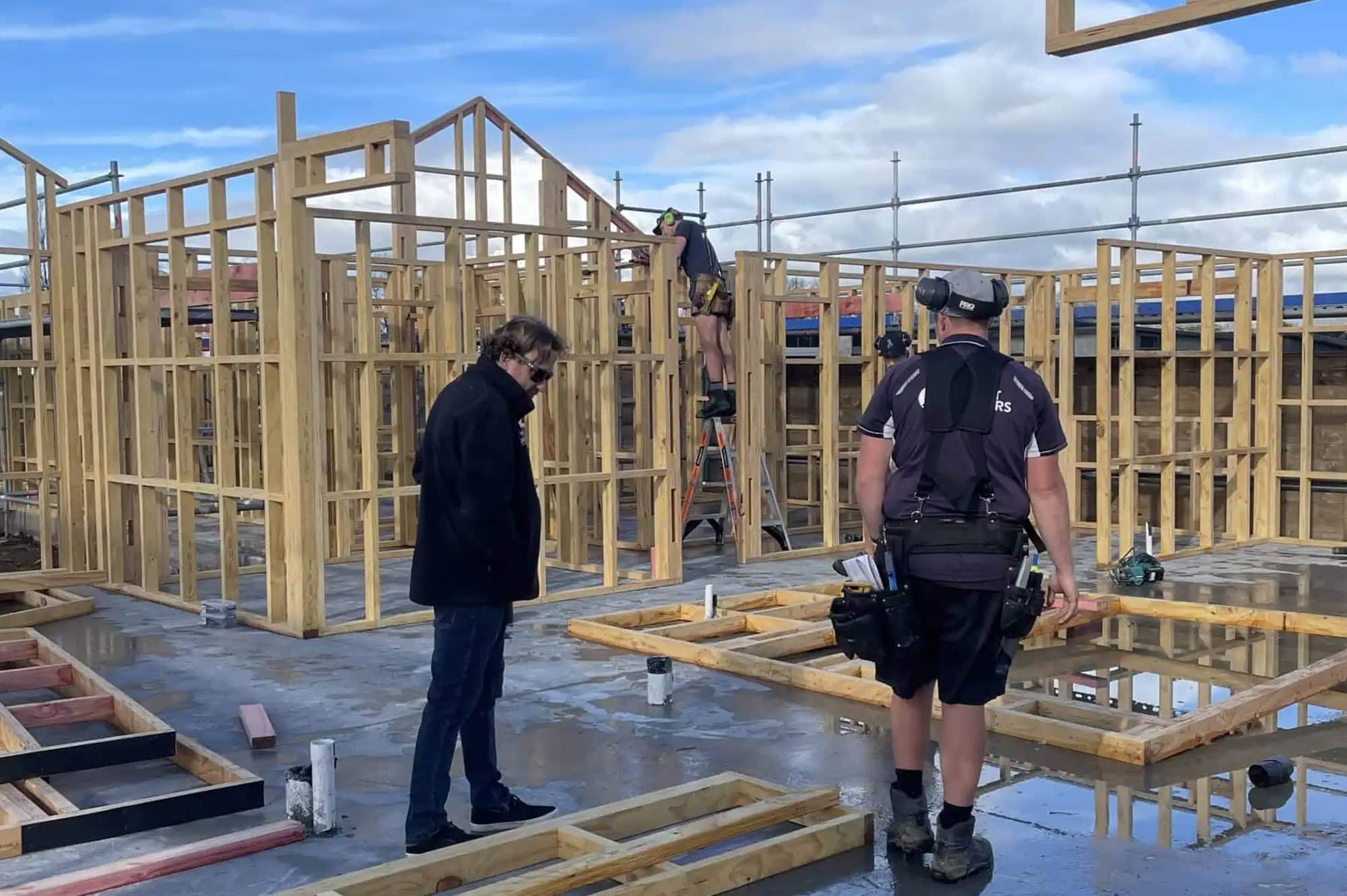
Another key factor not reflected in cost per square metre is the quality of the tradespeople. Lower-cost builds may rely on the cheapest available contractors, where the focus is simply on meeting minimum compliance standards. While this can reduce upfront costs, it can increase the likelihood of issues emerging over time, often resulting in additional repair or maintenance costs.
When comparing builders, it’s not just about what you’re getting; it’s who you’re getting on your build.
Understanding Cost Across Different Build Levels
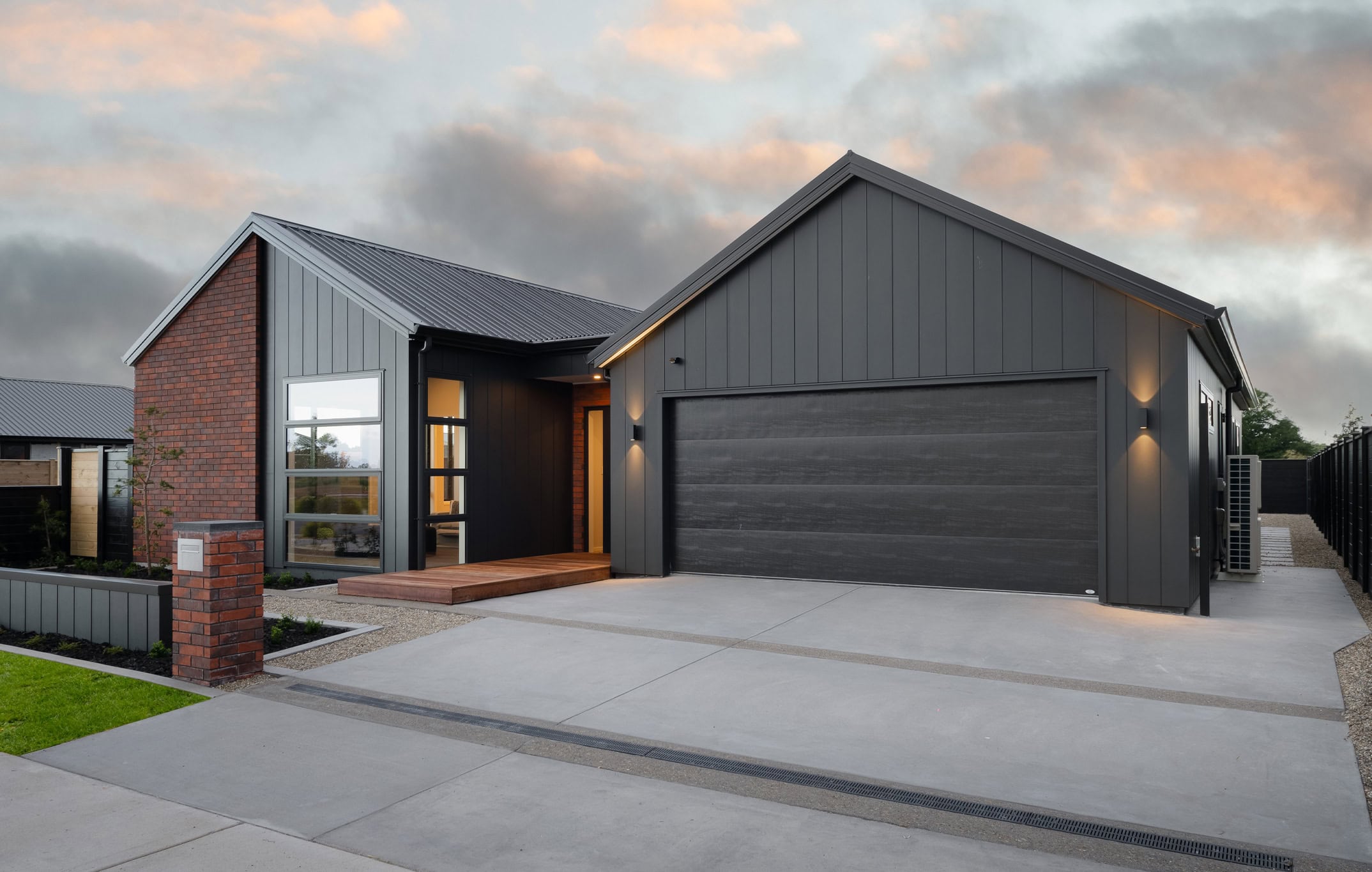
At Davies Homes, we’ve invested in a range of show homes to help clients clearly understand how costs vary across different levels of specification.
At our Bridleways development, you can view an:
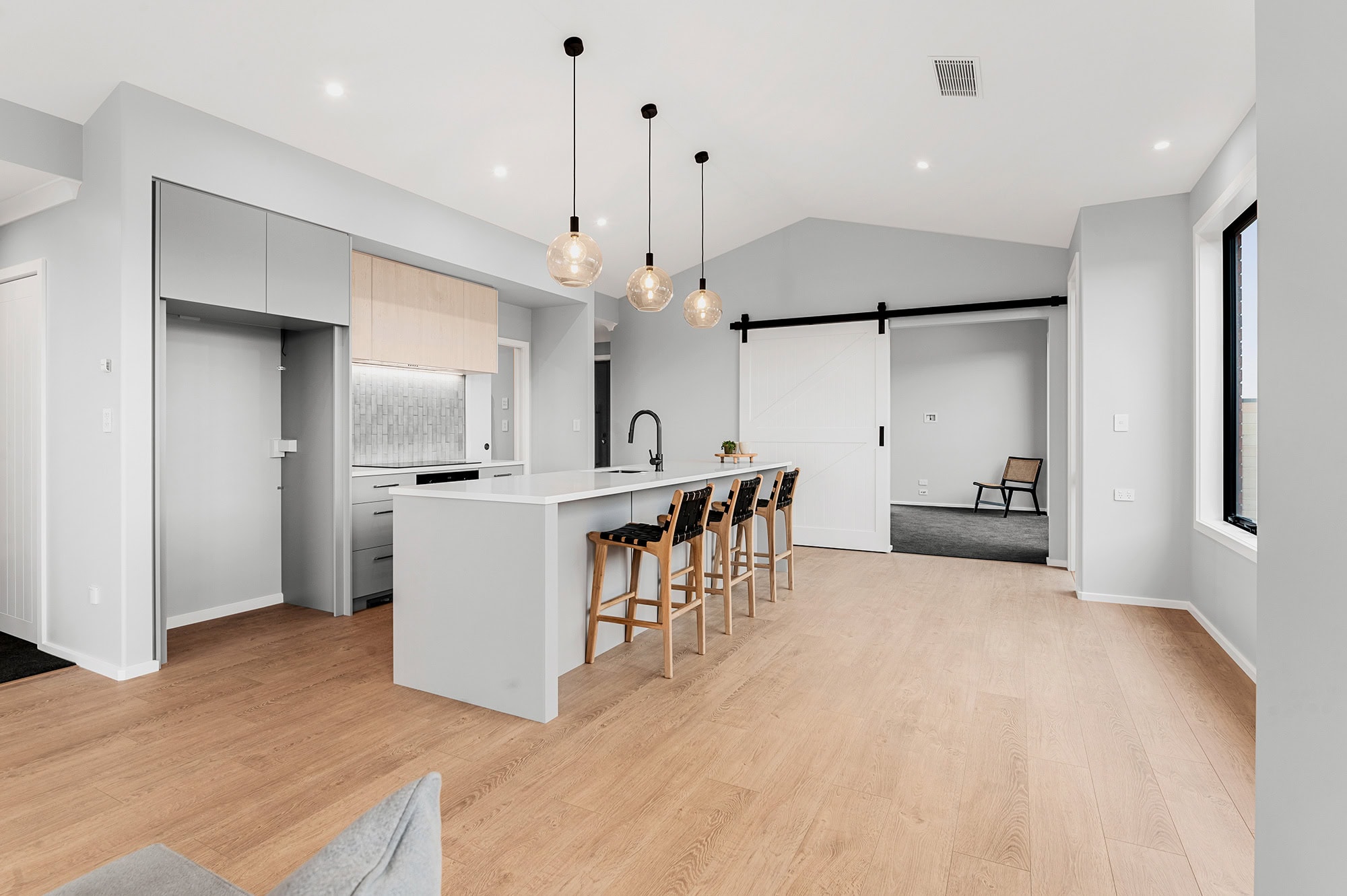
- An entry-level home
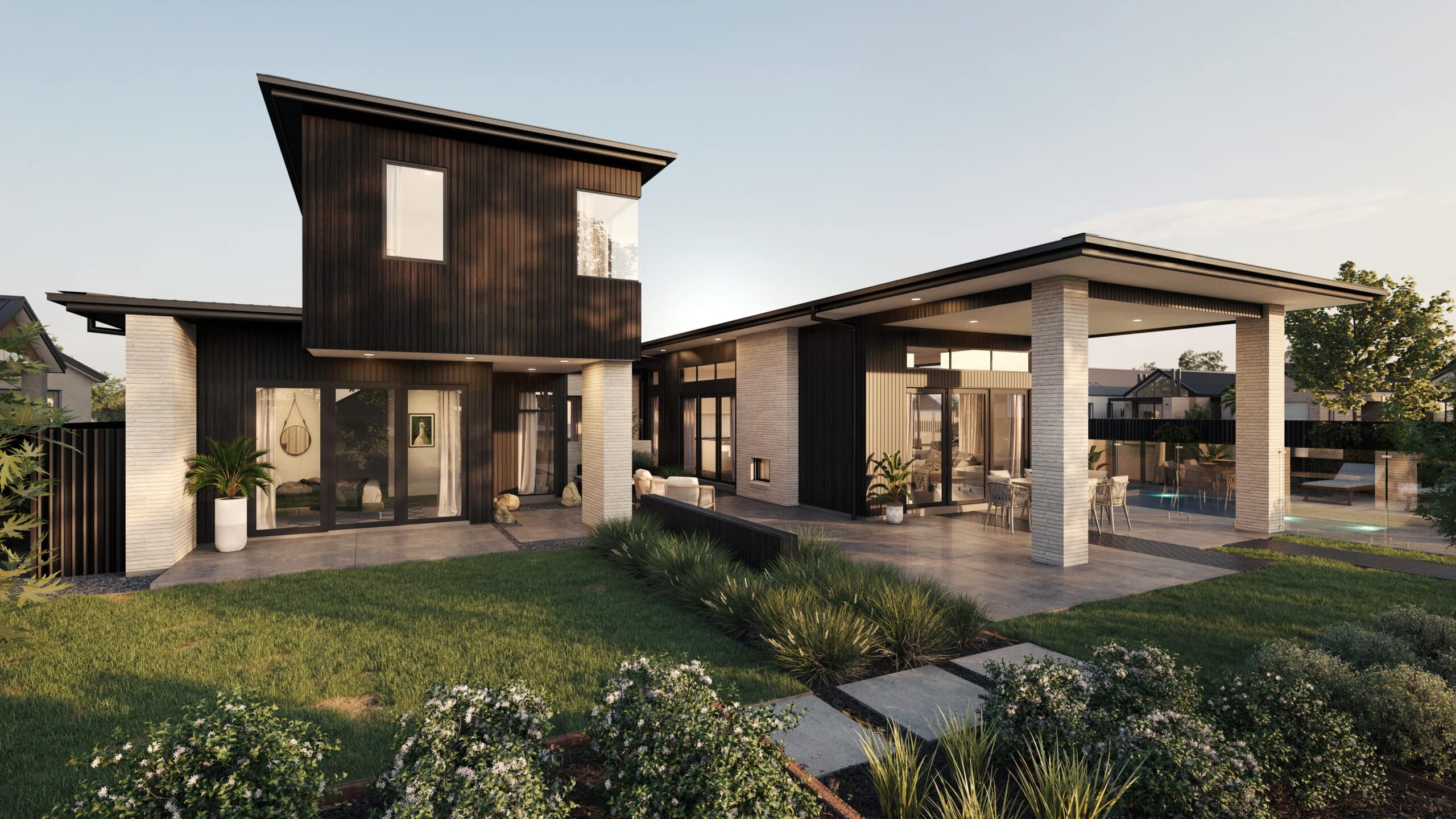
- A premium home (currently under construction)
We have also built many homes in the mid-range area, which we can point out to you as we take you around the area. Seeing different types of homes in the same location provides a far clearer understanding of what drives value.
Building a home is not a commodity purchase. It’s a complex process shaped by design decisions, site conditions, material choices, and the people delivering the work. It should be about value, not cost per meter.
What should I focus on instead of cost per square metre?
- The quality of materials and finishes.
- The builder’s experience and track record.
- The builder’s financial stability and reputation.
- The builder’s vision and design capability, including whether they offer in-house design and add value through smarter layouts and functionality.
- The experience and reputation of the subcontractors engaged to plumb, wire, paint and tile.
- The level of detail and transparency in the quote and what’s actually included.
If you want to truly understand what drives cost and value, the best place to start is by seeing it in person. Come and visit our show homes at Bridleways and explore the differences for yourself.
Frequently Asked Questions
Is cost per square metre a good way to choose a builder?
Not on its own. Cost per square metre can provide a rough guide, but it doesn’t account for differences in design, materials, site conditions, specifications, or what’s included in the quote. Two homes with the same floor area can vary significantly in price and quality.
Why do some builders have a lower price per m²?
A lower price per square metre doesn’t always mean better value. The price may reflect simpler designs, lower specifications, excluded items, and minimal standards to meet comliance. It’s important to compare the full scope of work, not just the square metre rate.
What Affects the Cost of Building a Home?
Many factors influence the cost of building a home beyond floor area alone, including:
- Site conditions, earthworks, and foundation requirements
- Design complexity, rooflines, ceiling heights, and glazing
- Materials, finishes, and level of specification
- Size of the home, as high-cost spaces like kitchens and bathrooms make up a larger proportion of smaller builds
- Subdivision covenants
- What is included in the quote, as some prices exclude landscaping, driveways, fencing, or site works
- The quality, experience, and availability of tradespeople and subcontractors involved in the build
Because every project is different, cost per square metre should only ever be used as a broad guide, not as an exact way to compare builders or overall value.
Why are smaller homes often more expensive per square metre?
Smaller homes still require essential spaces like kitchens, bathrooms, plumbing, and electrical systems. These are some of the most expensive parts of a build and don’t reduce proportionally with floor area, which can make smaller homes appear more expensive on a square metre basis.
Can two homes with the same size cost completely different amounts?
Yes. Two homes with the same floor area can have vastly different construction costs depending on site conditions, architectural detailing, material selections, engineering requirements, and level of finish.
What should I compare instead of price per square metre?
Instead of focusing solely on square metre rates, compare:
- The quality of materials and finishes
- The builder’s experience and track record
- The builder’s financial stability and reputation.
- The builder’s vision and design capability, including whether they offer in-house design and add value through smarter layouts and functionality
- The experience and reputation of the subcontractors engaged to plumb, wire, paint and tile.
- The level of detail and transparency in the quote and what’s actually included.
Do subdivision covenants affect building costs?
Yes. Some subdivisions have covenants that require sustainability features such as solar panels, EV charging capability, and rainwater detention tanks, along with requirements around cladding materials, roofing styles, landscaping standards, and the amount of permeable surface required on a section.
In some cases, this may mean using decking instead of concrete for patio areas or incorporating additional environmental design features into the home. These requirements can significantly influence the overall cost of building a home.